
Skip to content

Thank you

Scientific Forum 2026 · Iloilo City

Scientific Forum for the Private Sector and Academe

One room. Private sector and academe. September 29, 2026.

“Turning Foresight into Enabling Preparedness and Resilience amid the Threat of a Super El Niño”

Date
September 29, 2026
Venue
Belmont Hotel Iloilo, Iloilo City

89 slides · 7 decks · 5 presenters · 13 speakers

In collaboration with

  • Iloilo Business Club, Inc. logo
  • PCCI Iloilo logo

What we heard

Too much water or too little — and why Iloilo now plans for both

The forum posed its question as a choice: too much water, or too little. The presentations dissolved that choice. Flood and drought are not competing futures to pick between. They are two expressions of the same rainfall record arriving in the same city, and mean annual rainfall barely moving does not make either of them smaller.

Five presenters made one argument from five directions — a Manila Observatory fellow on hazards that become crises only when they collide with non-climate drivers, a marine scientist on heat that outlives the El Niño driving it, a PAGASA officer on a temporary event inside an already-moved baseline, a maritime DRRM officer on resilience no single institution can own, and a mall operator on sustainability as science already put to work.

Iloilo City's climate risk is not the hazard by itself; it is the collision between the hazard and a city whose amplifiers turn it into a crisis — subsiding land, a degraded watershed, drainage gaps, informal coastal settlements. El Niño is the forcing function, water security is the binding constraint, and early warning without anticipatory action changes nothing.

  1. Not a choice

    Flood and drought are two expressions of the same rainfall record arriving in the same city. Mean annual rainfall barely moving does not make either one smaller.

  2. The hazard is not the crisis

    Iloilo's climate risk is the collision between a hazard and a city whose amplifiers turn it into one: subsiding land, a degraded watershed, drainage gaps, informal coastal settlements.

  3. Water security is the binding constraint

    El Niño is the forcing function. Anticipatory action is what changes the outcome, and early warning on its own changes nothing.

  4. The baseline has already moved

    Marine heat outlives the El Niño driving it, and climate change is what sets the new normal. The event is temporary; the shift underneath it is not.

89

slides

7

decks

5

presenters

13

speakers

In their own words

  • We cannot prevent El Niño or a marine heatwave, but we can prevent climate hazards from becoming disasters by anticipating them, reducing local stressors, and acting before thresholds are crossed.
  • Science does not remove the dilemma. It clarifies the trade-offs and the room to act.
  • Like a ship facing heavy weather, we are all in the same vessel. Resilience therefore must be shared.
  • Climate change alters the baseline; El Niño is temporary.
  • Sustainability is the result of science in action, engineered to bridge progress with resilient development.
  • El Niño ≠ no floods.

What each presenter put on the record

Five inputs, transcribed from the decks

  • Portrait of Dr. Charina Lyn Amedo-Repollo

    Dr. Charina Lyn Amedo-Repollo

    Assistant Professor & Deputy Director · UP Marine Science Institute

    Session 1 panel

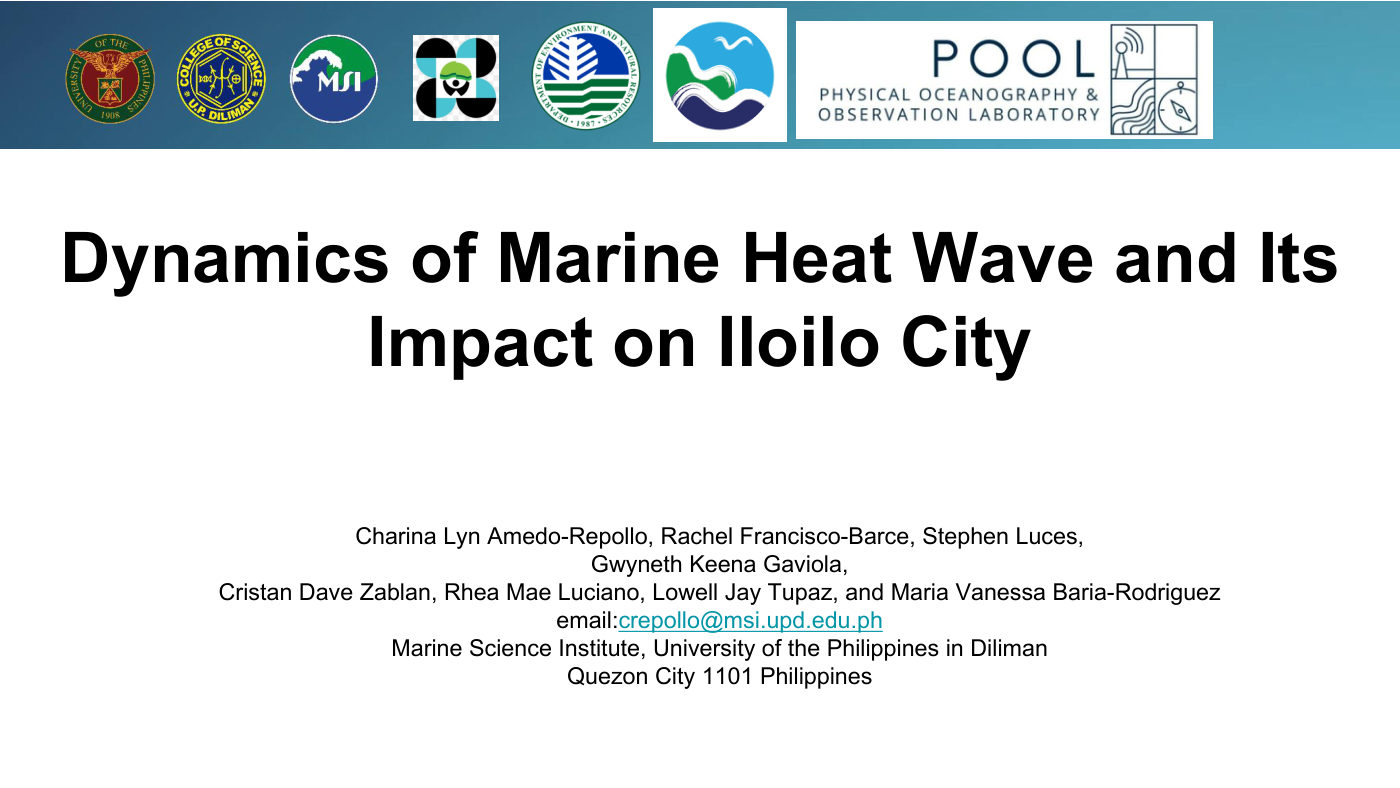
    • 2025 set record Philippine sea-surface temperatures with no El Niño at all — the baseline has already moved.
    • The extreme warming arrived at the end of the 2023–24 El Niño (peaking June 2024, past 2015–16): marine heat outlives the event driving it.
    • Coral bleaching exceeded 50% in Iba, Bolinao and Anda; Porites was least susceptible, Fungids most.
    • Eight Spotter Buoys now stream real-time wave, wind, temperature and pressure data.
    • Seven takeaways: monitor (one dashboard spanning ENSO, rainfall, air temperature, SST, marine heat waves and degree-heating weeks); anticipate compound hazards but keep flood and surge readiness — El Niño ≠ no floods; protect water; protect people; protect the coast; move fisheries from response to early action; use El Niño as a city stress test.
  • Portrait of Dr. Rosa T. Perez

    Dr. Rosa T. Perez

    Senior Research Fellow · Manila Observatory

    Session 2 lecture

    Session 3 panel

    • 21 of 180 barangays (~97,000 people) are storm-surge exposed; 72 barangays carry high flood risk; the city leans on groundwater.
    • Five El Niño water crises in 19 years — 2007, 2009, 2015, 2019, 2024 — each drawing a “state of imminent water crisis” declaration.
    • ₱2.9B crop damage across Western Visayas in 2024 (₱1.5B the province’s share); 924 heat-related cases in five weeks of 2026.
    • Non-climate amplifiers: ~9 mm/yr land subsidence in Mandurriao and La Paz, Maasin watershed degradation, drainage gaps, informal coastal settlements.
    • Six priorities: water security as critical infrastructure; climate in land-use and coastal planning; urban cooling and green infrastructure; anticipatory action and early warning; protect the most exposed communities; close the policy–implementation gap.
    • Mean annual rainfall barely moves (~5% decrease signal) — the danger is when water arrives, not how much falls in a year.
    • Wet and dry extremes intensify in the same place: max 1-day rainfall projected +20–25% across parts of Visayas by late century while Consecutive Dry Days climb.
    • Iloilo City CDRA SPI: SPI3 and SPI12 already reach severity 2 in the 1986–2005 baseline; 4 under RCP4.5 and 4–5 under RCP8.5 by late century.
    • Manage extremes, not averages: exposure reduction and setbacks, nature-based and hybrid solutions, conjunctive surface+groundwater supply, reduced non-revenue water.
    • Six decision principles: plan for ranges not points; no-regret actions first; keep options open against irreversible high-exposure development; integrate climate into investment; monitor and update; address equity explicitly.
    • Blue-economy levers for Iloilo: port and logistics modernisation, fisheries and aquaculture, coastal tourism and gastronomy (UNESCO Creative City of Gastronomy).
    • The trade-off to name out loud: port expansion, reclamation and riverside development can erase flood buffering, fishery nurseries and amenity value.
    • Water security is the binding constraint; energy reliability and cost come next.
    • Value chains must strengthen, not displace, municipal fisherfolk, small vendors and informal livelihoods.
    • Role split stated explicitly — private sector (water-efficient operations, watershed payments and mangrove protection, circular waste, cold chains, TNFD-aligned nature-risk reporting) and academe (ecosystem-service valuation, FWE nexus modelling, co-produced research, talent, evaluation, monitoring).
  • Portrait of Capt. Jorge Aborde

    Capt. Jorge Aborde

    Safety Officer and DRRM Point Person · John B. Lacson Foundation Maritime University

    Session 3 panel
    • The food–water–energy nexus cascades: water drives food production, energy drives water supply and logistics, transport drives access to food and fuel.
    • “A maritime university does not operate in isolation… Our campus boundaries do not define the limits of our responsibility.”
    • Four layers of shared resilience: campus → community → city → maritime commerce.
    • The university contributes human capital, knowledge and environmental stewardship — “competent seafarers and responsible stewards of the ocean”.
  • Portrait of Engr. Liza Silerio

    Engr. Liza Silerio

    Vice President, Corporate Compliance Group · SM Supermalls

    Session 3 panel

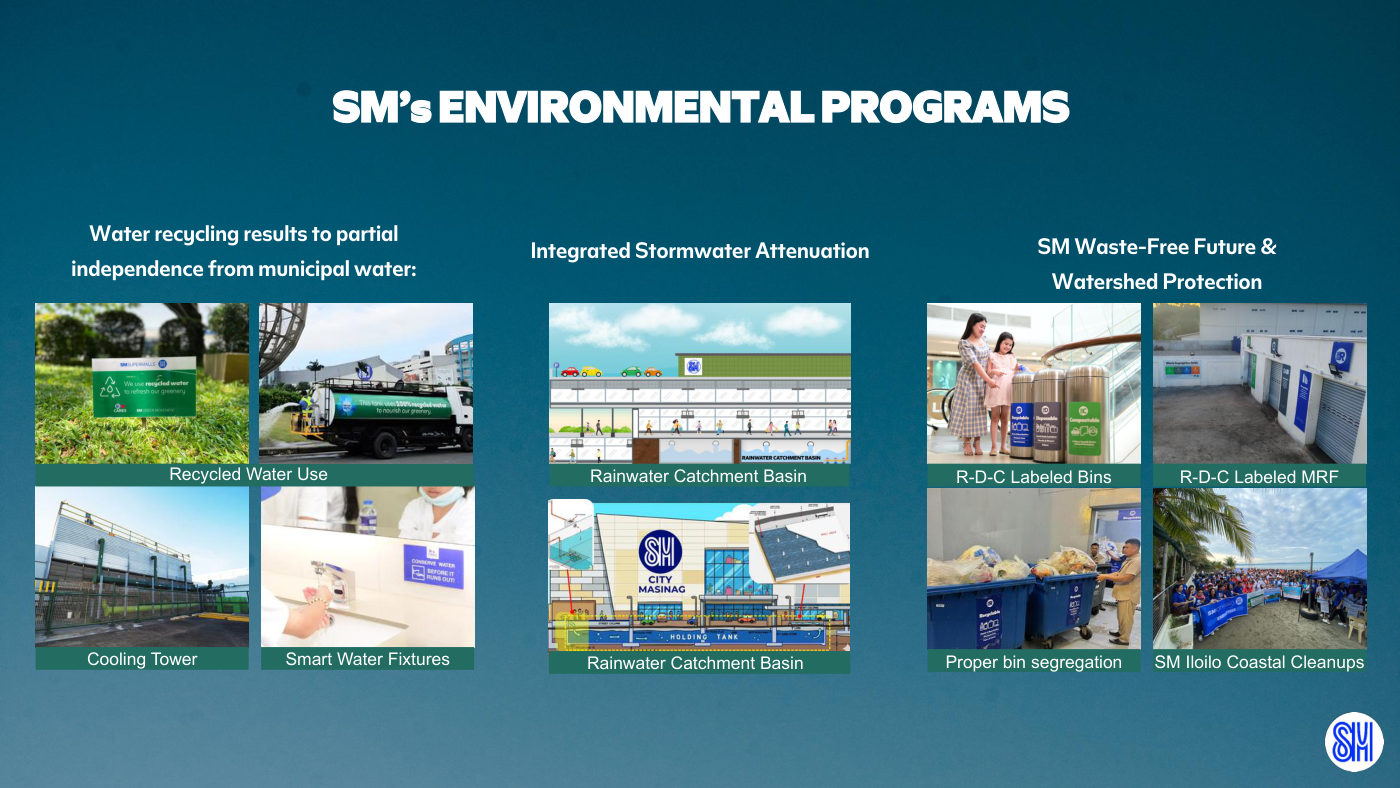
    • Environmental programme already running: water recycling, rainwater catchment basins, stormwater attenuation, smart fixtures, R-D-C segregation and MRF, watershed protection, coastal cleanups.
    • Decarbonising malls and securing grid stability: skylights and LEDs, building-management systems on air-conditioning, motion-sensor escalators, chiller setpoint tuning, rooftop solar at Iloilo/Taytay/North EDSA/Fairview, EV charging, exterior insulation — BEE and renewables as partial grid independence.
    • Resilience as business continuity: earthquake drills with employees, tenants and customers; disaster-resilient mall design.
    • Whole-of-society coordination: SM Business Continuity Planning and CARE Desk, ARISE and NRC meetings with Iloilo City, Adopt-a-City, Trash to Cash, e-waste collection, International Coastal Cleanup, MSME empowerment.
  • FL

    Engr. Ferdinand L. Rubin Jr.

    PAGASA Regional Services Division · DOST-PAGASA, Iloilo Complex Station

    PAGASA briefing

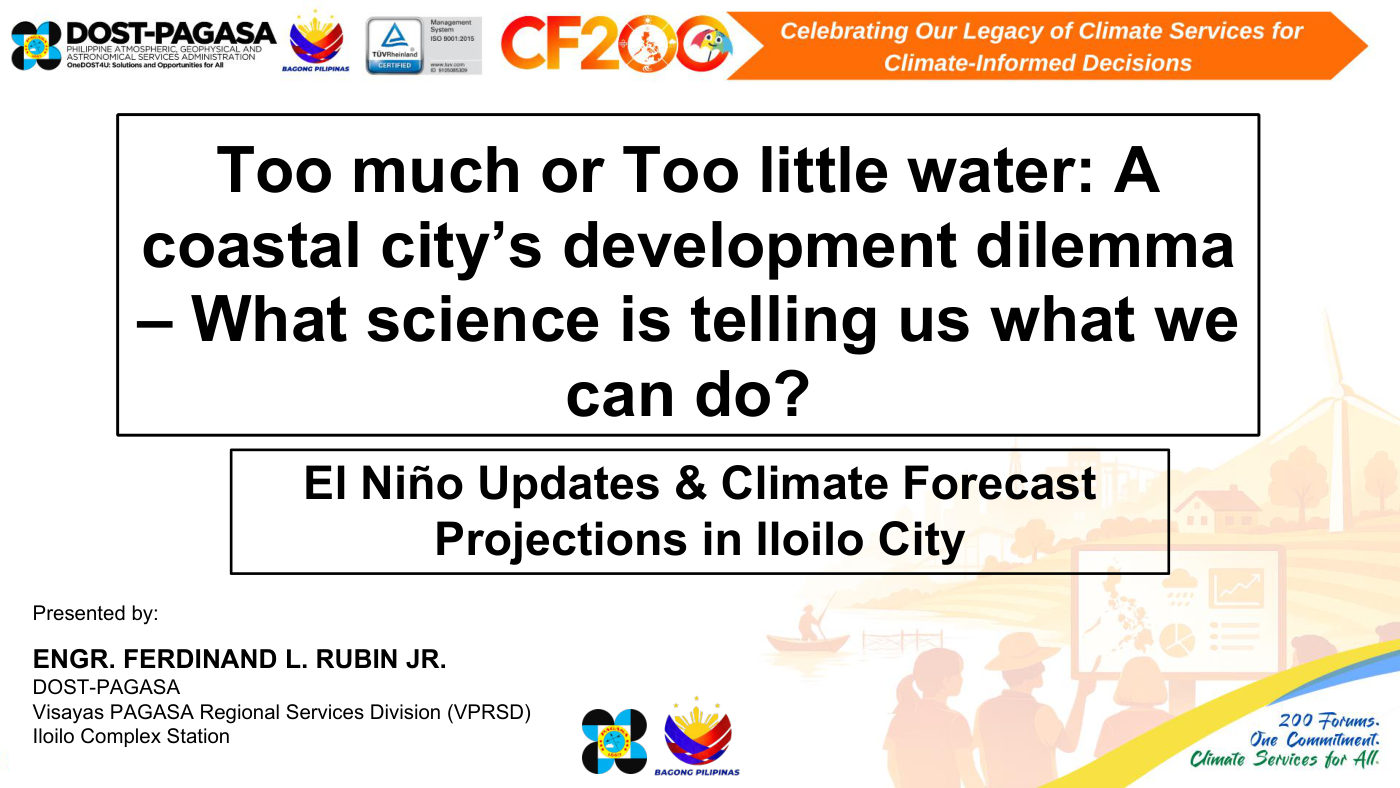
    • El Niño Advisory #4 (7 September 2026): expected to strengthen to a very strong state before the end of 2026 and persist at least into the first half of 2027.
    • Region VI including Iloilo City: below- to way-below-normal rainfall November 2026 – March 2027, with possible dry spell to drought by end of January–February–March 2027.
    • CLIRAM SSP 5-8.5: drying trend in April, May, August and September; wetting October–January; warming in every month by 2100.
    • The warning chain runs PAGASA → NDRRMC/OP → OCD → DRRMCs/RDRRMCs/PDRRMCs → LGU units, local stations and the public.
    • Preparing for El Niño builds immediate resilience and prepares for long-term climate change; integrated water and urban adaptation is essential for Western Visayas.

The slide decks

The slides, as they were presented

Every deck from the day, in the presenters’ own words — 89 slides across 7 talks. Swipe sideways on your phone to move through them, then read one or take it with you.
  • First slide of Marine Heatwaves and the New Ocean Baseline

    Session 1 panel

    Marine Heatwaves and the New Ocean Baseline

    32 pages7.1 MB

    Download PDF
  • First slide of Coastal El Niño Climate Risk Briefing

    Session 2 lecture

    Coastal El Niño Climate Risk Briefing

    11 pages0.23 MB

    Download PDF
  • First slide of Too Much or Too Little Water

    Session 2 lecture

    Too Much or Too Little Water

    11 pages0.14 MB

    Download PDF
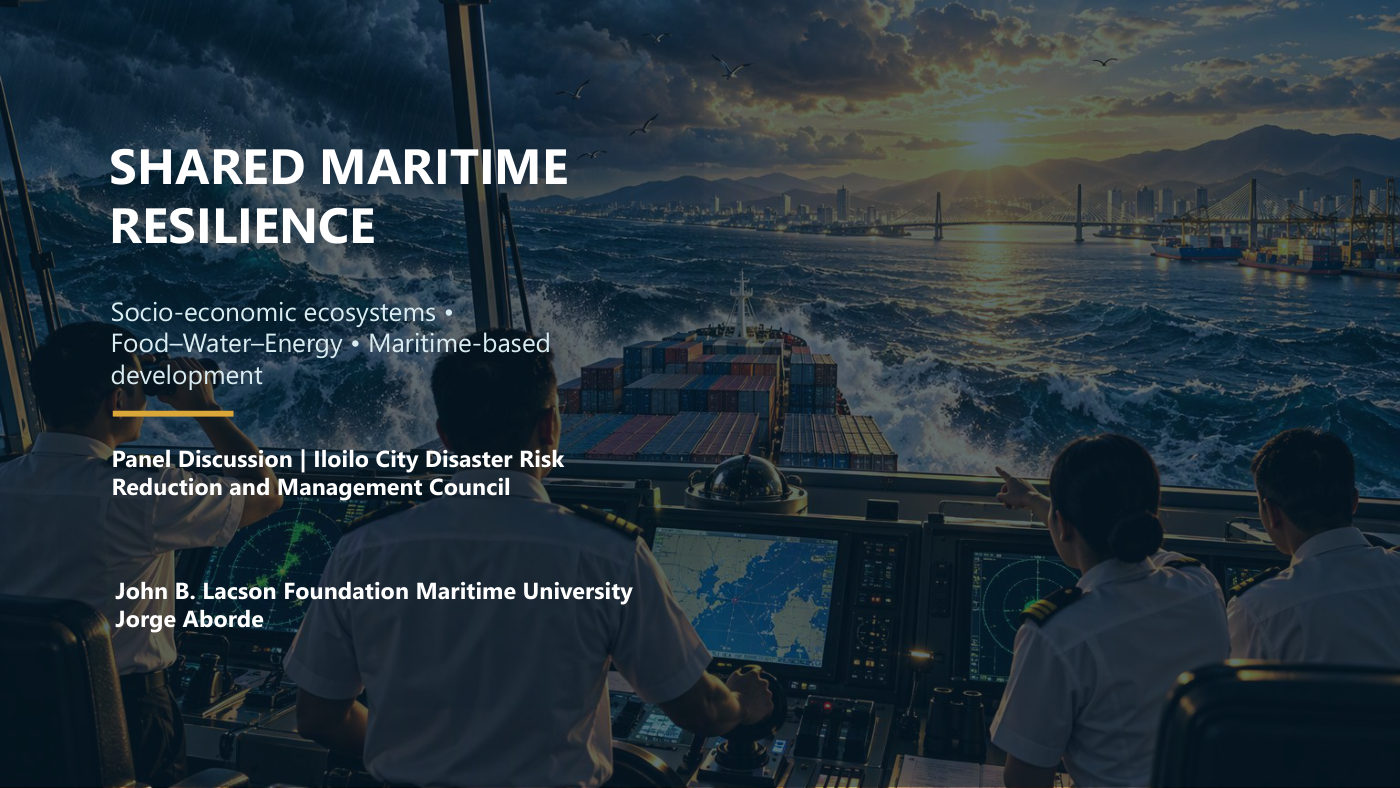
  • First slide of Shared Maritime Resilience

    Session 3 panel

    Shared Maritime Resilience

    7 pages1.4 MB

    Download PDF
  • First slide of Food-Water-Energy Nexus and Maritime Development

    Session 3 panel

    Food-Water-Energy Nexus and Maritime Development

    10 pages0.09 MB

    Download PDF
  • First slide of Decarbonizing Malls and Securing Grid Stability

    Session 3 panel

    Decarbonizing Malls and Securing Grid Stability

    3 pages2.9 MB

    Download PDF
  • First slide of El Niño Updates for Iloilo and Region VI

    PAGASA briefing

    El Niño Updates for Iloilo and Region VI

    15 pages3.0 MB

    Download PDF

How the day unfolded

A day shaped around the theme

The official scientific program as it ran on September 29, 2026, at Belmont Hotel Iloilo — every session below has since been presented.

  1. 7 AMOpening

    Registration

  2. 8:30 AMOpening

    Preliminaries

    Preliminaries with master of ceremony Kenneth Lerona.

    Speakers: Kenneth Lerona

  3. 9 AMOpening

    Welcome Remarks

    Welcome remarks by Hon. Raisa S. Treñas, Iloilo City Government.

    Speakers: Hon. Raisa S. Treñas

  4. 9 AMKeynote

    Keynote Address

    Keynote address by Ma. Antonia Loyzaga, Special Envoy for Disaster Risk Reduction and Management.

    Speakers: Maria Antonia Yulo-Loyzaga

  5. 9 AMOpening

    Photo Opportunity

  6. 9:30 AMPanel

    Session 1: Climate and non-climate impact drivers for a coastal city facing a very strong El Niño

    Panel and modified conversation moderated by Jessica Dator-Bercilla, Resilience Fellow, National Resilience Council.

    Speakers: Dr. Rosa T. Perez · Dr. Charina Lyn Amedo-Repollo · Jessica Dator-Bercilla

  7. 10:30 AMDiscussion

    Open Forum (Q and A)

  8. 10:45 AMSession

    Session 2: Too Much or Too Little Water — a coastal city's development dilemma

    What science is telling us and what we can do. With Dr. Rosa Perez, Senior Research Fellow, Manila Observatory (IPCC).

    Speakers: Dr. Rosa T. Perez

  9. 11:45 AMDiscussion

    Open Forum (Q and A)

  10. 12 PMBreak

    Lunch

  11. 1:30 PMPanel

    Session 3: Socio-economic ecosystem services — food-water-energy and maritime-based development

    Panel and modified conversation moderated by Rhea Peñaflor, Cebuana Lhuillier Foundation, Inc., with representatives from SM Supermalls, JBLFMU, the Coast Guard District Western Visayas, and the IPCC.

    Speakers: Engr. Liza Silerio · Capt. Jorge Aborde · Dr. Rosa T. Perez · Rhea Peñaflor

  12. 3 PMPanel

    Session 4: Insights on risk and resilience in the face of too much or too little water in Iloilo City

    Panel and modified conversation on energy demand fueling climate and disaster risks, moderated by Jessica Dator-Bercilla, Resilience Fellow, National Resilience Council.

    Speakers: Ma. Luisa Segovia · Engr. Fulbert Woo · Mr. Angelo David Berba · Mr. Roel Z. Castro · Jessica Dator-Bercilla

  13. 3:30 PMDiscussion

    Open Forum (Q and A)

  14. 4 PMDiscussion

    Co-design huddles

    Co-design huddles between private sector representatives.

  15. 4:30 PMClosing

    Synthesis and Closing Ceremony

Thank you

The people who stood up and spoke

The experts and voices who gave the Scientific Forum their morning — from the host city, climate science, ocean science, and disaster resilience. Every one of them took the room's question seriously.

Portrait of Kenneth Lerona

01

Kenneth Lerona

Kenneth Lerona is the founder and president of Cornelius Magnate Engagement & Consulting.
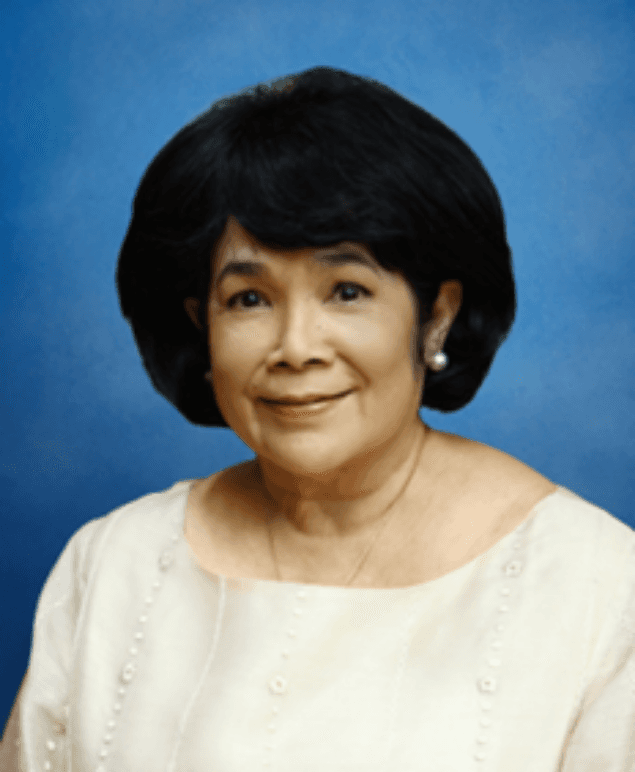
Portrait of Maria Antonia Yulo-Loyzaga

02

Maria Antonia Yulo-Loyzaga

Ms. Toni Yulo-Loyzaga is the former Secretary of the Department of Environment and Natural Resources (DENR) of the Philippines and a leading figure in climate and disaster resilience.

Portrait of Dr. Rosa T. Perez

03

Dr. Rosa T. Perez

Dr. Rosa T. Perez is an expert in climate change and disaster risk assessment and management, integrating climate science into policy and practice for vulnerable communities in developing regions.

Portrait of Dr. Charina Lyn Amedo-Repollo

04

Dr. Charina Lyn Amedo-Repollo

Dr. Charina Lyn Amedo-Repollo is a physical oceanographer whose research and advocacy focus on climate change impacts on the ocean, particularly marine heatwaves, coastal circulation, fisheries…

Portrait of Engr. Liza Silerio

05

Engr. Liza Silerio

Ms. Liza Silerio is the Vice President for Corporate Compliance Group for SM Supermalls and Program Director for SM Environment and Sustainability with over 20 years of experience in Mall Operations.

Portrait of Capt. Jorge Aborde

06

Capt. Jorge Aborde

Capt. Jorge Aborde is a Licensed Master Mariner and maritime professional with 20 years of experience aboard international-going vessels.
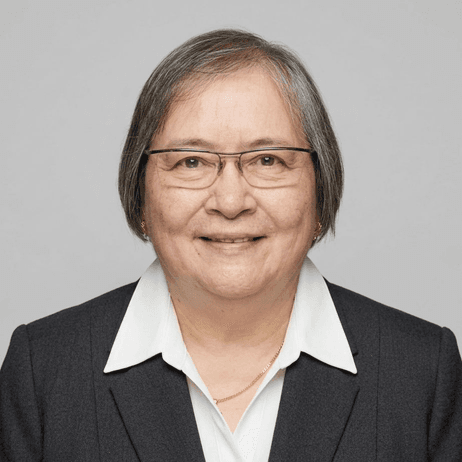
Portrait of Ma. Luisa Segovia

07

Ma. Luisa Segovia

Marissa Segovia is a business leader, civic volunteer, and private-sector development advocate from Iloilo City.

Portrait of Engr. Fulbert Woo

08

Engr. Fulbert Woo

Engr. Fulbert Woo is a business leader, engineer, and community servant whose work is deeply rooted in service, leadership, and sustainable growth.
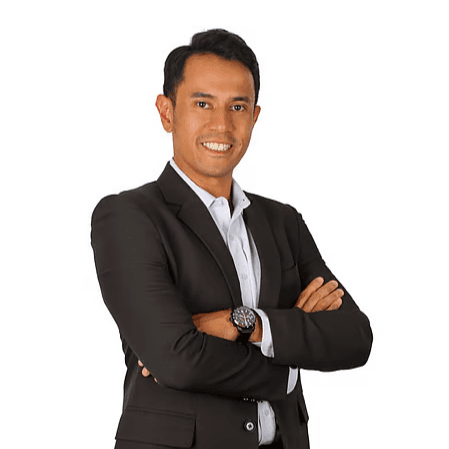
Portrait of Mr. Angelo David Berba

09

Mr. Angelo David Berba

Mr. Angelo David C. Berba is Chief Operating Officer of Metro Pacific Iloilo Water (MPIW) and Metro Iloilo Bulk Water Supply Corporation (MIB), bringing 21 years of leadership experience in the…
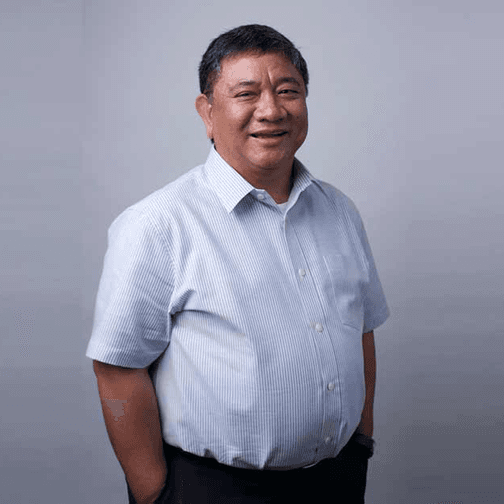
Portrait of Mr. Roel Z. Castro

10

Mr. Roel Z. Castro

Mr. Roel Z. Castro is a business executive with over twenty years of leadership experience.

Portrait of Jessica Dator-Bercilla

11

Jessica Dator-Bercilla

Ma'am Jec, as she is fondly called, is a recognized expert in climate and disaster resilience, particularly for coastal cities and small islands, with a strong focus on risk governance, co-beneficial…

Portrait of Rhea Peñaflor

12

Rhea Peñaflor

Rhea B. Peñaflor, LLB, MPSA, CSSWB currently serves as Programs and Development Division Head of Cebuana Lhuillier Foundation, Inc.

About the forum

One room. Two communities. A question now answered.

Iloilo City has long used science to strengthen climate and disaster resilience, from post-Typhoon Frank assessments to Flood Summits and Science Fora. As extreme heat, intense rainfall, drought, and other climate risks intensify, the ICDRRMC is turning foresight into action through Project TRANSFORM. This forum — Turning Foresight into Enabling Preparedness and Resilience amid the Threat of a Super El Niño — will unite the local government unit, scientists, private sector, and academic institutions to better understand the “New Normal” and build a safer, more resilient Iloilo City.

Date
September 29, 2026
Time
7:00 AM – 4:30 PM (Asia/Manila)
Venue
Belmont Hotel IloiloDaytano Ave., Iloilo Business Park, Mandurriao, Iloilo City

Certificate

One step left: tell us how it went

Your certificate is issued to the name on your registration. The evaluation asks for the same email you registered with, matches your record, and fills the name for you.

Get your certificate
Livestream from the Iloilo City DRRMO. If the player does not load, watch it on Facebook.